Note: Page 65 is blank.
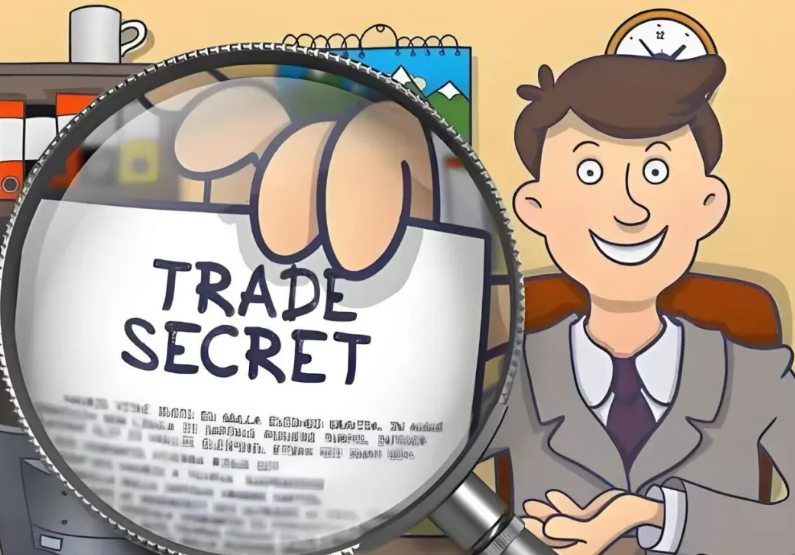
The Guangzhou Intellectual Property Court ruled seven defendants liable for "virtual digital human" trade secret infring...
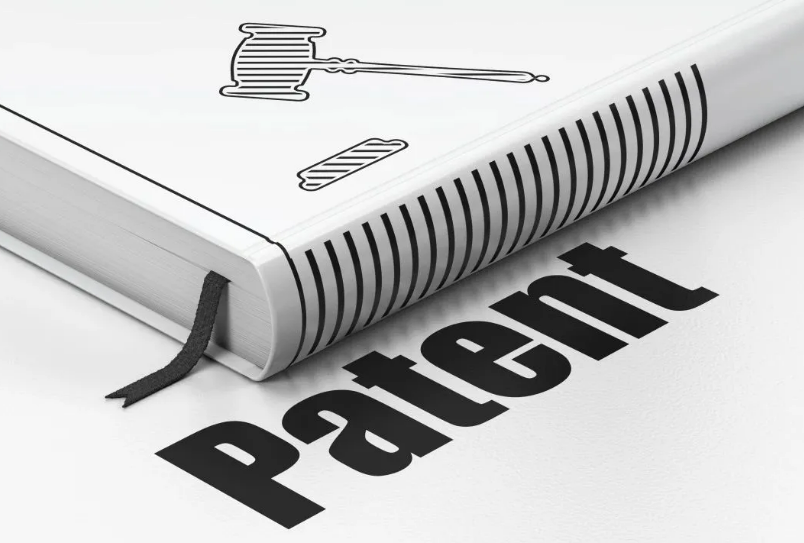
The Supreme People's Court ruled that patentees with valid patents and positive evaluation reports fulfill duty of care,...
On December 30, 2025, the Beijing Intellectual Property Court rendered its second-instance judgment in the unfair competition dispute between Xu Boyang, the grandson of Xu Beihong, and Times Beihong (Beijing) Culture and Art Center (hereinafter referred to as "Times Beihong Center"), dismissing the appeals of both parties and affirming the first-instance judgment.
Both parties in this case are closely associated with the late renowned painter Mr. Xu Beihong. The appellant, Xu Boyang, is the son of Xu Boyang, the eldest son of Xu Beihong, while the appellant, Times Beihong Center, has as its legal representative Yang, whose spouse, Xu Ji, is the son of Xu Qingping, the second son of Xu Beihong. Both parties have long been engaged in commercial activities related to Mr. Xu Beihong and his works, including exhibitions and the issuance of digital collectibles, and are in direct competition with each other.
In the first-instance lawsuit, Xu Boyang alleged that Times Beihong Center, in its publicity on its WeChat public account "Xu Beihong Art Museum" and on the Taobao auction platform, repeatedly used expressions such as "uniquely founded by the Xu Beihong family," "possesses the sole copyright to 3,500 works," and "has registered trademarks related to Xu Beihong," and also claimed that Xu Beihong digital collectibles sold on other platforms were "counterfeit works." Xu Boyang argued that these actions constituted false advertising and commercial defamation, demanding that the defendant cease the infringement, eliminate its effects, and pay economic damages of RMB 1 million as well as reasonable expenses.
After trial, the first-instance court rendered a judgment finding that some of Times Beihong Center's publicity content constituted false advertising. It ordered the defendant to cease the infringement, pay RMB 200,000 in economic damages and RMB 32,520 in reasonable expenses, while dismissing Xu Boyang's other claims (such as elimination of effects and higher damages). Subsequently, both parties, dissatisfied with the first-instance judgment, appealed to the Beijing Intellectual Property Court.
Upon trial, the Beijing Intellectual Property Court held that Times Beihong Center's statements in its publicity, such as being "established with authorization from the descendants of Xu Beihong," were factually substantiated as Xu Qingping and Xu Ji had indeed issued such authorizations, and thus did not constitute false advertising. However, the court simultaneously pointed out that Times Beihong Center's emphasis that it and its projects were the "solely" founded or the "sole" project of the Xu Beihong family lacked evidentiary support and was liable to mislead consumers, thereby constituting false advertising.
Furthermore, the court determined that Times Beihong Center's claims of "possessing the sole copyright to 3,500 works" and "having obtained trademark rights, copyrights, and authentic authorizations" lacked factual basis. The court noted that the property rights in copyright for Mr. Xu Beihong's works had entered the public domain as the term of protection had expired, and the evidence on record failed to demonstrate that Times Beihong Center had obtained copyright authorizations for all of the works. Accordingly, such publicity content also constituted false advertising.
Additionally, regarding the commercial defamation claim asserted by Xu Boyang, the court held that the "certain digital platforms" referenced in Times Beihong Center's statements did not clearly refer to Xu Boyang or his affiliated platforms, and the existing evidence was insufficient to prove that his business reputation had been harmed as a result. Therefore, the court did not sustain this claim.
This case reflects the conflicts arising from the commercial development of a renowned artist's work IP among the artist's descendants. The judgment indicates that Times Beihong Center had obtained authorizations from certain family members, including Xu Qingping and Xu Ji. Such authorizations are confined to the right of authorship, the right to protect the deceased's personality interests, and commercial development. However, as the property rights in copyright for Xu Beihong's works have entered the public domain, the descendants of Xu Beihong are not entitled to prohibit others from reproducing, distributing, or making such works available through information networks. Such authorizations may allow Times Beihong Center to enforce rights in the name of the "Xu Beihong family," such as combating counterfeit works and preserving the integrity of the works, but they do not confer an "exclusive right to develop." The center's external publicity, which sought to project an image as the "sole representative of the family," was ultimately determined by the judiciary to constitute unfair competition.


 CHINA intellectual PROPERTY LAWYERS NETWORK
 +86-13910160652
 ciplawyers@163.com


 Home
Home




Comment