Note: Page 65 is blank.

The Guangzhou Intellectual Property Court ruled seven defendants liable for "virtual digital human" trade secret infring...
The Supreme People's Court ruled that patentees with valid patents and positive evaluation reports fulfill duty of care,...
Recently, the China National Institute of Standardization released the "Standard Essential Patent Development Report (2026)." The report's data collection cut-off date is December 31, 2025, and its policy and case information cut-off date is October 5, 2026. This is the third consecutive annual Standard Essential Patent (SEP) series report, following those released in 2024 and 2025.
Ecosystem and Data Overview
The report uses a three-stage analytical framework—"portfolio formation, licensing negotiations, and dispute resolution"—to examine the diverse entities involved, including enterprises, patent authorities, standardization bodies, patent pools, judicial organs, administrative enforcement agencies, and alternative dispute resolution institutions.
As of December 31, 2025, the total number of patent disclosure declarations made to the three major international standards organizations—ISO, IEC, and ITU—reached 6,950, a year-on-year increase of 1.82%, involving 2,031 international standards, accounting for approximately 4.43% of the total standards of the three organizations. The top three countries by number of declarations are the United States (2,492), Japan (1,220), and South Korea (598); China ranks seventh with 348. However, in terms of the number of patents involved in the declarations, China ranks first with 7,679. The information technology sector accounts for 5,977 declarations, approximately 86% of the total SEP declarations of the three organizations.
International Organization Governance and Major Country Developments
At the WTO level, the EU's dispute against China in DS611 (the anti-suit injunction case) has essentially concluded; in April 2026, the EU stated that China had formally announced the withdrawal of its "anti-suit injunction policy." The panel for DS632 (the global royalty rate case) was established in March 2026, and the parties agreed in May of the same year to resolve the dispute through arbitration proceedings.
At the WIPO level, its SEP case database has included 134 judicial decisions from 12 jurisdictions and the UPC. In June 2026, it published a special report on "The Economics of FRAND," comparing three valuation methodologies: the comparable licenses approach, the bottom-up approach, and the top-down approach. In November 2025, it launched a mediation commitment for IoT small and medium-sized enterprises, with Huawei, Ericsson, Nokia, Qualcomm, and Sisvel among the first signatories.
Major countries (regions) are demonstrating a clear trend of rule competition. The USPTO established an SEP Task Force in December 2025, emphasizing the restoration of strong remedies for patent holders. The EU's dedicated SEP legislative proposal was withdrawn in February 2025, and the European Parliament filed a lawsuit with the Court of Justice of the European Union in response. The Munich Regional Court I in Germany issued the world's first "anti-interim license injunction" in the SEP field and applied the top-down approach to determine FRAND royalties for the first time. The UK Supreme Court granted permission for the Tesla v. Avanci patent pool global royalty rate case to proceed to substantive trial. The Tokyo District Court in Japan published its SEP mediation and litigation trial guidelines for the first time. A Brazilian court for the first time found that a patent holder's provision of a patent pool licensing scheme constituted performance of a FRAND obligation. The Commercial Court of Casablanca in Morocco issued Africa's first SEP judicial decision in July 2026.
Key Industry Practices
SEP practices are expanding in three dimensions. In terms of technology fields, 3GPP released the first 6G standard timeline in June 2026, and ISO/IEC/ITU launched the development of the next-generation video compression technology H.267 standard in July 2026. In terms of industry sectors, licensing is expanding from smart terminals to intelligent connected vehicles, point-of-sale terminals, and streaming media services; Avanci's vehicle licensing program covers more than 140 automotive brands in total. In terms of practitioners, patent pools continue to expand; the WIPO Arbitration and Mediation Center has a settlement rate of approximately 70% in SEP disputes, and the UPC Patent Mediation and Arbitration Centre (PMAC) officially commenced operations in June 2026.
In the field of dispute resolution, in the Samsung v. ZTE case, courts in China, Germany, and the UK issued three different global royalty rate judgments in the same period (US$731 million by the Chongqing First Intermediate People's Court, US$392 million by the England and Wales High Court, and US$640 million by the Munich Regional Court in Germany), highlighting the diversified landscape of global royalty rate adjudication.
China's Development Achievements and Outlook
In terms of policies and institutions, the "15th Five-Year Plan for Intellectual Property Protection and Utilization" issued in July 2026 explicitly proposes strengthening fair and reasonable licensing of SEPs and establishing and improving an international SEP thematic database. The China National Intellectual Property Administration (CNIPA) released the "Guidelines for Invention Patent Applications Involving Standards" in March 2026 and, in July of the same year, issued an official reply on the application of the FRAND principle in administrative adjudication of SEP disputes.
In terms of judicial practice, the Supreme People's Court added "standard essential patent disputes" as a third-level cause of action in December 2025. In case (2023) Zui Gao Fa Zhi Min Zhong No. 2875, it clarified that the conduct of asserting rights after failing to truthfully disclose patent information during standard-setting constitutes an abuse of patent rights. The Chongqing First Intermediate People's Court applied both the top-down approach and the comparable licenses approach to determine the 5G royalty rate in the ZTE v. Samsung case.
The report concludes by presenting an outlook for SEP development during the "15th Five-Year Plan" period from three aspects: "policy and institutional coordination," "working mechanism coordination," and "scientific research and innovation coordination." It also includes an overview chart of the SEP ecosystem and a chart of the policy development trajectory.
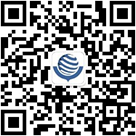
Attachment: Scan the QR code below to obtain the full PDF text of the "Standard Essential Patent Development Report (2026)."



 CHINA intellectual PROPERTY LAWYERS NETWORK

 +86-13910160652
 ciplawyers@163.com



 Home



Comment